
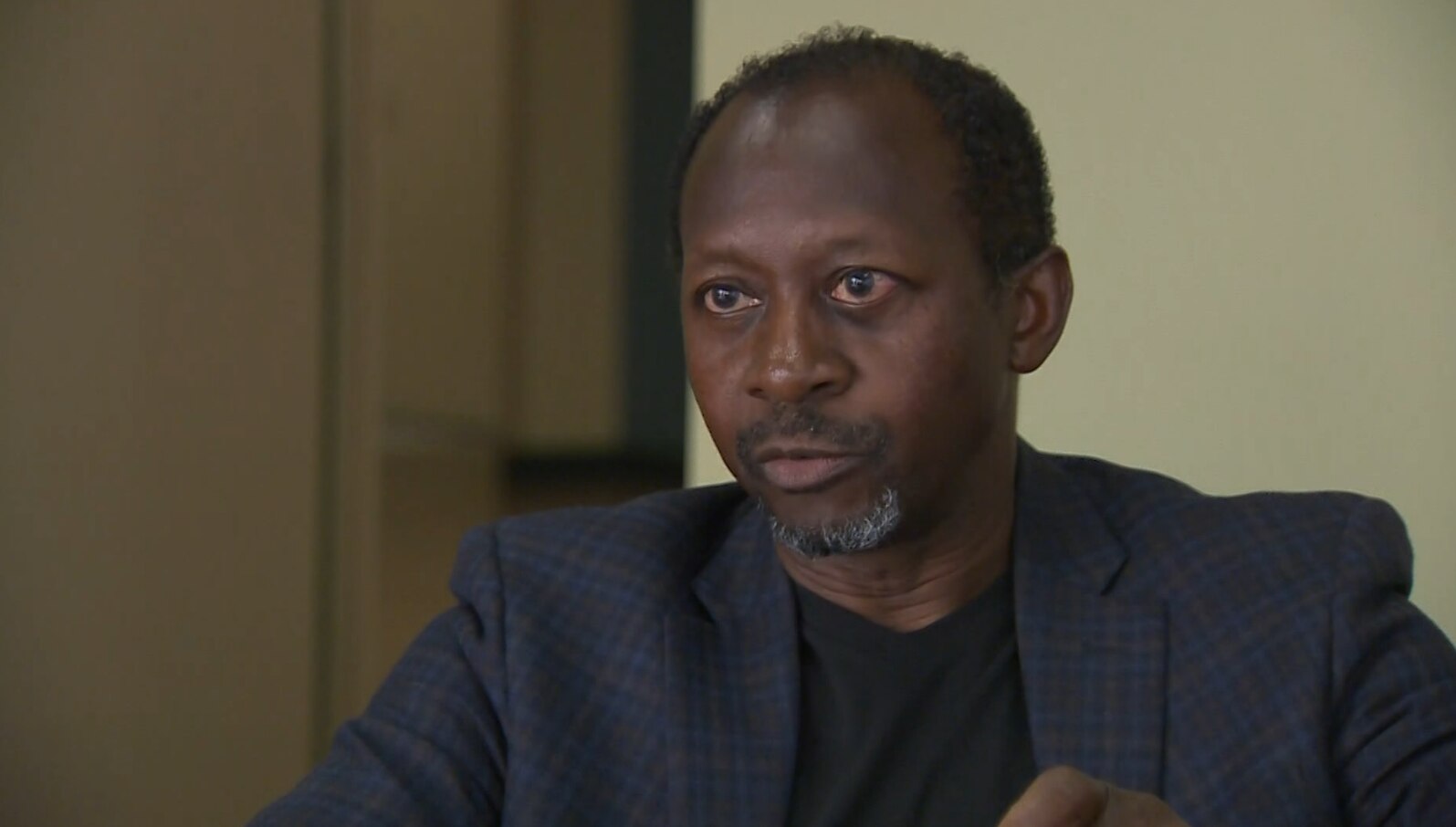
High-profile Baltimore attorney Kenneth Ravenell may be headed for prison after a federal appellate court denied his request to review his case.
Ravenell was sentenced to just under five years in prison in June 2022, seven months after a trial in which former clients testified that Ravenell helped them funnel drug proceeds through his law firm. Ravenell has remained free pending appeals, with much of documents filed in his case since his conviction completely sealed.
A three-judge panel on the Fourth Circuit Court of Appeals denied his appeal in April, and he sought to have the full court take up the case. The National Association of Criminal Defense Lawyers wrote an amicus brief on his behalf.
After his initial report date was pushed back, Ravenell was set to report to prison on July 7. But he was given hope on July 6 when the appellate court said he could stay home while awaiting their decision on whether to take up his case. Most defendants await the outcomes of their appeals from prison.
On Friday, by a 9-5 majority, including Chief Judge Albert Diaz, the appeals court denied his request for what is called an “en banc” hearing, or a hearing in front of the full court. Previously, in April, a three-judge panel upheld his conviction.
In an opinion written for the majority, Judge Harvey Wilkinson said that the en banc process is reserved for questions of “exceptional importance,” and the dissenting judges were focused on factual disputes instead of legal questions.
“The dissenting opinion disputes these facts but cannot dispute the governing law,” Wilkinson wrote. “There is no reasonable argument that the district court erred in applying the appropriate law for non-overt act conspiracies. The opinions reveal only an argument about the facts of the case, as to which I believe the panel majority is quite correct, but which in all events does not make for the kind of dispute we need to sit en banc.”
Ravenell’s attorneys said they will appeal the case to the U.S. Supreme Court.
“We are disappointed by the Fourth Circuit’s decision and agree with the five judges who voted for rehearing en banc,” pro bono attorneys David Zornow and Michael McIntosh said in a statement. “We will now seek review in the Supreme Court to vindicate Mr. Ravenell’s constitutional right to a jury determination on all issues.”
Judge Roger L. Gregory, writing for the five judges who dissented, said the trial judge had refused to instruct the jury on the statute of limitations, which he said “stifled the jury’s ability to weigh Ravenell’s guilt.”
“I am hard-pressed to think of a question of greater importance than the subjugation of an accused’s constitutional right to a jury trial,” he wrote.
Ravenell rose to become one of the most prominent and successful attorneys in Baltimore.
The allegations in the case span more than a decade. Ravenell’s client, Richard Byrd, was indicted in 2014 for running a cross-country cannabis operation. Ravenell first represented Byrd in the 1990s, when Byrd was a stick-up boy in Park Heights and Ravenell won him an acquittal in a murder case. Over the years, Byrd developed a sophisticated cannabis operation and also built up successful clothing and nightclub businesses.
“Me and Mr. Ravenell used to have these meetings where we’d discuss the nuts and bolts of everything, and structure of how we’re going to operate to make sure that the government is not alerted to what we’re doing or how we cover our tracks,” Byrd testified at Ravenell’s trial. “You’d have to look at him like a Bill Belichick and me like a Tom Brady — he draws the plays up, and I run them.”
Authorities raided Ravenell’s office at the Murphy Firm in 2014. While he stopped taking federal criminal cases, no charges were brought until 2019, when he was indicted.
Byrd flipped and became a witness for the government, and wore a wire when Ravenell’s defense attorney and a private investigator came to meet him in prison. That attorney, Joshua Treem, and the investigator, Sean Gordon, were charged in 2020. Prominent members of the city legal community decried what they said was an overzealous prosecution.
Treem and Gordon were acquitted by jurors, but Ravenell was convicted.
“The jury reviewed the facts and understood that attorneys must not participate in and profit from a client’s illicit drug deals. The lawyer is the champion of the accused in court, not a co-conspirator,” Wilkinson wrote in Friday’s majority opinion.
The dissenting judges said that the trial judge, Liam O’Grady, was wrong to deny a request from the defense to instruct the jury on the statute of limitations and how it could apply to the allegations. Gregory wrote that the decision “overrode Congress’s intent to set limits on criminal liability and took a pivotal determination out of the jury’s hands,” violating Ravenell’s Sixth Amendment rights.
But the majority said that the case was charged as a “non-overt act conspiracy,” which requires an “affirmative showing of discontinuation or abandonment by the defendant.” There was no such showing, they said, and there were in fact overt acts that occurred within the five-year statute of limitations period.


Comments
Welcome to The Banner's subscriber-only commenting community. Please review our community guidelines.