
The Maryland Supreme Court on Tuesday dismissed lawsuits brought by Baltimore, Annapolis and Anne Arundel County against more than two dozen oil and gas giants, dealing a blow to local efforts to hold fossil fuel companies accountable for damages from climate change.
Baltimore first sued 26 fossil fuel companies — including ExxonMobil, Chevron, Royal Dutch Shell and the American Petroleum Institute — in 2018, alleging that the industry had misled the public for decades about the causes of climate change. Annapolis and Anne Arundel County filed their own lawsuits three years later.
Lower courts threw out the cases from the three jurisdictions, all of which border the Chesapeake Bay and are affected by rising waters. After the suits wended their way through federal and state courtrooms, the Maryland Supreme Court heard oral arguments in a consolidated appeal last October.
The state high court said Tuesday that the lower courts were correct to dismiss the cases.
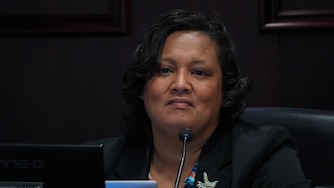
In a 75-page majority opinion, Justice Brynja McDivitt Booth wrote that, by suing the fossil fuel companies, the jurisdictions attempted to go beyond their own borders to regulate greenhouse gas emissions — a job she said the U.S. Supreme Court has long held falls to federal law.
Booth wrote that the local governments’ case hinges on an argument that the fossil fuel industry has driven greater greenhouse gas emissions, accelerated climate change and exacerbated storm surges, floods and heat waves, not just in Maryland but far beyond their legal jurisdiction.
“No amount of creative pleading can masquerade the fact that the local governments are attempting to utilize state law to regulate global conduct,” Booth argues.
An attorney for the oil and gas companies did not immediately comment on the decision.
In a statement, Sara Gross, chief of the Affirmative Litigation Division of the Baltimore Law Department, pointed to the lengthy dissent of Justice Peter K. Killough, who took issue with the majority’s contention that Baltimore and its peers have attempted to “regulate” emissions through their legal case.
Instead, Killough argues that the jurisdictions have attempted to hold oil and gas companies accountable for misleading the public and leaving local taxpayers to deal with the consequences.
“Those are local injuries caused by local impacts of a global phenomenon,” he writes, “and they are alleged to have resulted from a fraud, not from an emissions policy.”
The burning of fossil fuels releases greenhouse gases, which accumulate in the atmosphere and contribute to warming. All three jurisdictions have pursued costly projects to guard against climate impacts, including a $90 million waterfront redevelopment in Annapolis.
The Maryland lawsuits mirror other attempts by cities around the country to hold fossil fuel companies liable for climate change – efforts that have seen mixed results.
Judges hearing cases filed by Vermont and Honolulu, Hawaii have allowed them to move forward, but a judge dismissed New York City’s lawsuit against big oil companies last year.
Four justices on the Maryland court concurred with Booth’s opinion, but Killough and Justice Joseph Watts penned partial dissents taking issue with core parts of the decision.
Even if federal jurisdiction didn’t trump local jurisdiction on the matter, Booth argued that the three governments failed to make a sufficient case under Maryland law.
When it comes to Baltimore’s arguments that oil companies obscured knowledge about climate change, for instance, Booth argues that the city sought to impose “a duty to warn the entire human race” about climate change.
“Finding such a duty would stretch tort law beyond any manageable bounds,” she writes.
A final word on whether local governments can sue oil and gas giants over their role in climate change could fall to the U.S. Supreme Court. Last month, the country’s high court agreed to hear a Boulder, Colorado’s case against the fossil fuel industry.




Comments
Welcome to The Banner's subscriber-only commenting community. Please review our community guidelines.