
Looking to furnish your home? Try looking on the side of the highway.
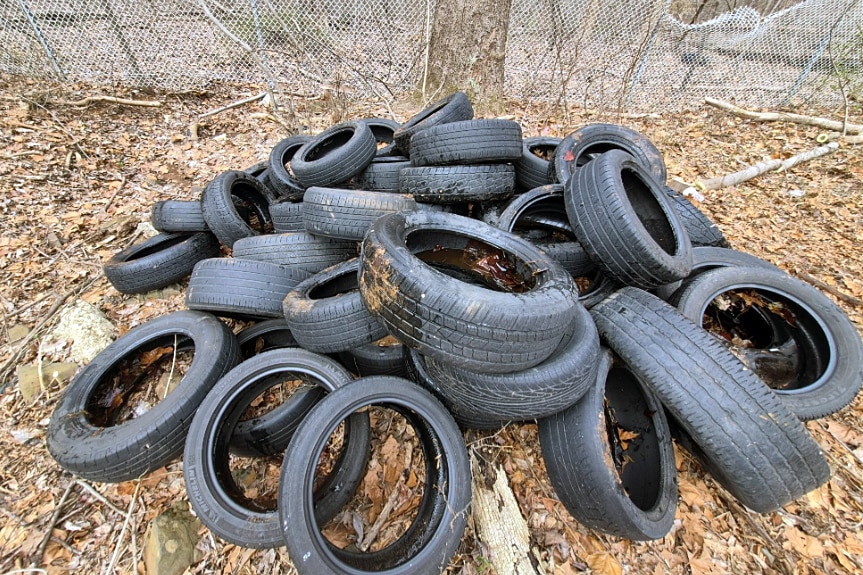
This week, Maryland State Highway Administration crews kicked off its all-hands-on-deck, weeklong litter cleaning mission called “Operation Clean Sweep.” So far, crews have picked up everything from fast-food containers to mattresses. Piles of tires have been found dumped in the wooded areas along highways.
Charlie Gischlar, deputy director of communications with the Maryland State Highway Administration, said one crew even picked up a desk from the side of the highway.
Gischlar said litter is becoming an ”ugly issue” across Maryland, and it’s costing the state tens of millions of dollars every year to address.
Operation Clean Sweep is an initiative that has been in place since 2023. Crews go out several times a year to clean up the sides of highways more intensively than during regular workdays. The State Highway Administration teams up with contractors and the Department of Corrections inmate crews throughout the week to pick up the roadside litter all day, every day.
These major sweeps take place in the spring so workers can mow more easily during April and May. The crews will go out again just before major holiday travel to prevent hazards on the road as more people hit the highway.
Read More
During the 2025 spring cleaning, workers found a gas cap, holiday decor and a “creepy doll head” among the trash piles. Those were just a few items among the five million pounds of litter picked up from the side of highways in 2025, said Gischlar. It cost the state $16.5 million to pick it all up.
Small pieces of litter, including cigarette butts or straws, can also clog drainage systems or end up in the Chesapeake Bay, making it a much bigger issue for the environment, said Gischlar.
“Litter’s a very expensive problem,” Gischlar said. “It’s a health hazard problem. It’s a danger problem. We want people to just partner with us, and don’t trash our roadside.”
If you are caught littering, you can face penalties ranging from a $1,500 fine and possible 30 days in prison to a $30,000 fine with up to five years in prison, according to the Maryland Department of the Environment.




Comments
Welcome to The Banner's subscriber-only commenting community. Please review our community guidelines.